PSH Atacama (Chile)
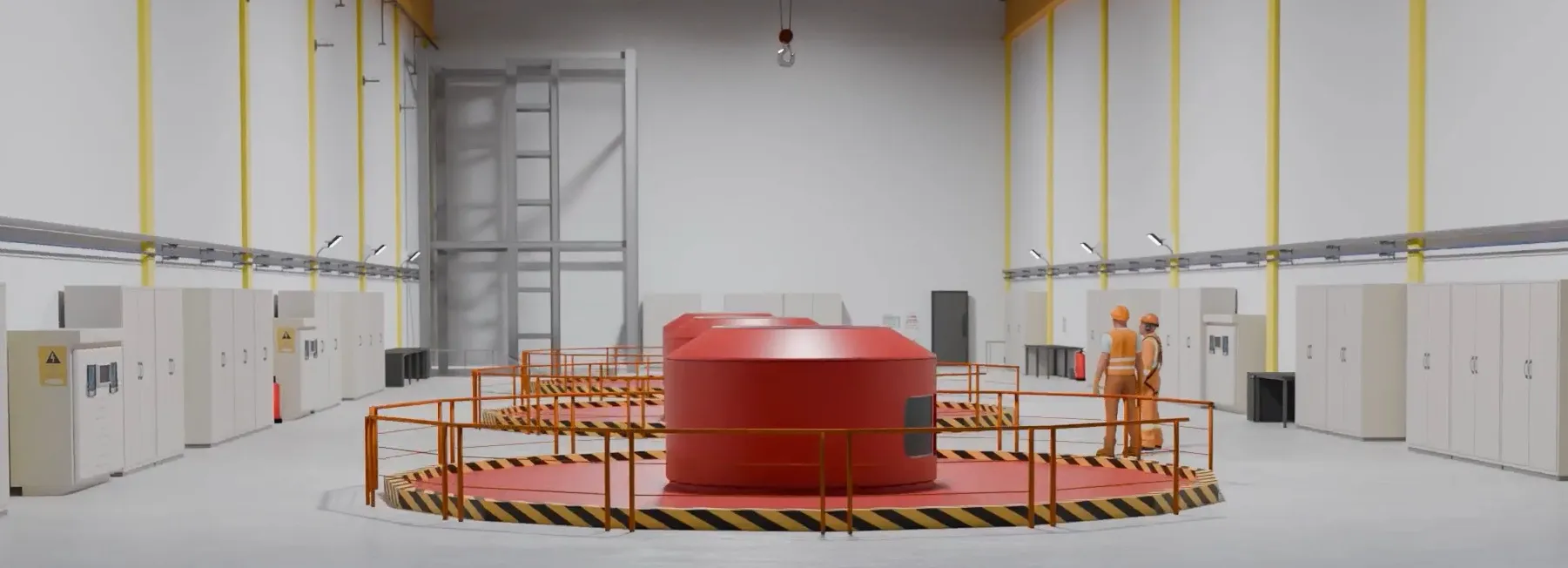
A 450 MW pumped-storage plant featuring 3 turbine pumps, Gross head: 376 m and 3 600 MWh of daily storage (8h generation / 10h pumping)
General description
Among the pumped-storage hydropower (PSH) projects that Hyvity is developing in Latin America and Asia, the Mirador de Atacama project (450 MW) has just reached a key milestone. After several months of intensive work and numerous field missions, the studies are nearing completion with very positive results:
- Technical studies and impact assessments (social and environmental) finalized;
- Validation of the project’s robustness, particularly on the geotechnical level;
- Confirmation of the structural need and strategic importance of this type of facility within the Chilean energy context.
General data
- Capacity : 450 MW / Storage: 3,600 MWh
- Cycle : 8h discharge /10h pumping
- Grid connection : Cardones 220 kV
- Machine : 3 Turbine Pump units (francis)
- Gross head : 376 m
- Penstock length : 2.5 km
- Water net volume : 4.87 Mm3
This period provided us with the opportunity to exchange with numerous stakeholders and to initiate several lines of thought with industrial players with the objective of deploying optimized technical solutions.
This is notably the case with the turbine manufacturer Andritz, as well as with the companies CARPITech and COVEX, with whom we are seeking innovative solutions to preserve water resources through the drastic reduction of infiltration and evaporation. Additionally, our work alongside the company Hydrogrid allows us to model the operation and integration of our infrastructure into its Chilean environment through a transversal and global numerical simulation tool.
Today, the securing of the Atacama project is sufficiently mature to engage in the search for financial partners in order to structure the following steps and start construction as soon as possible to support the Chilean grid as early as 2031. The next step is therefore the filing of the EIA (Environmental Impact Assessment) dossier with the state services to initiate its instruction and obtain the necessary sectoral permits.
This work reinforces our expertise in the development of PSH projects and, building on this momentum, we are accelerating the development of several other similar projects in Chile for a total potential of 2 GW!!!
Operating Principle
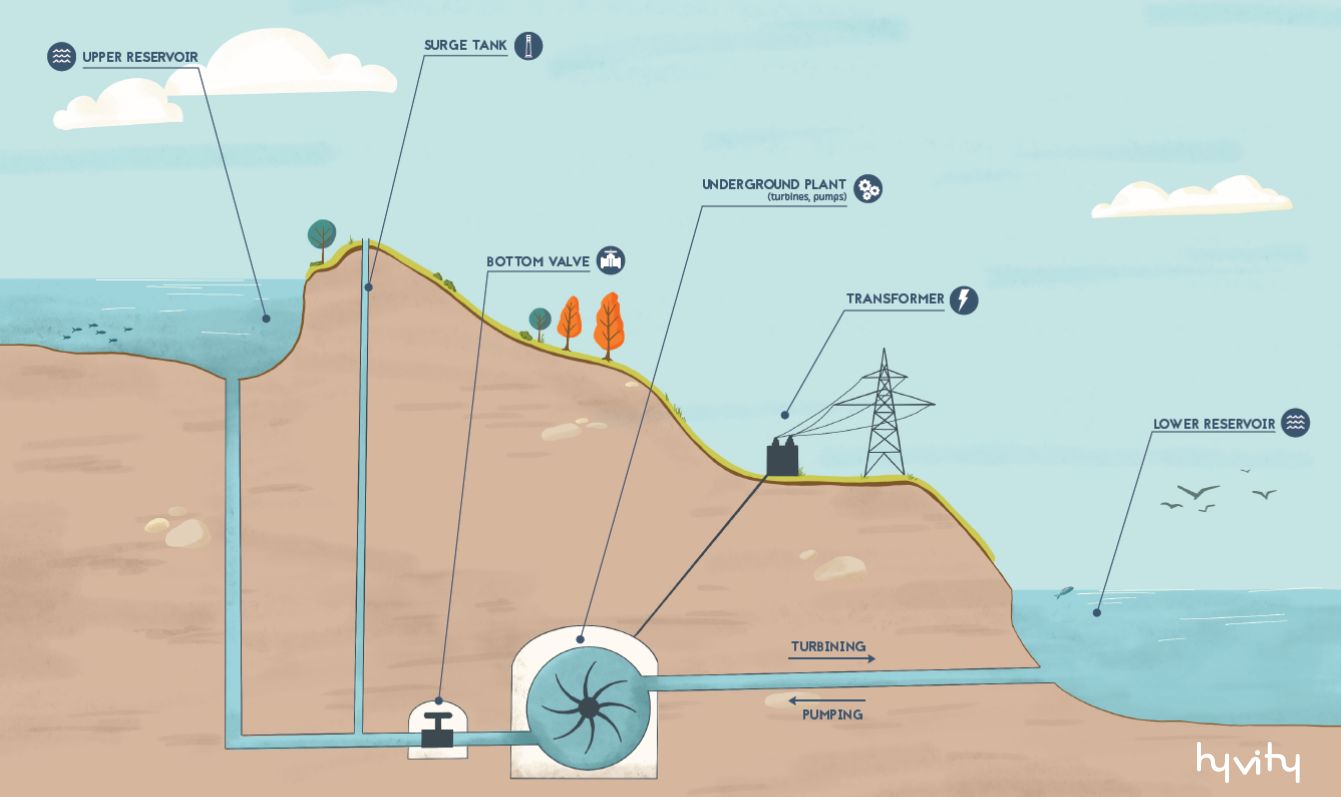
The principle of a Pumped Hydro Storage (PHS) involves transferring water between two reservoirs located at different altitudes, by exploiting the potential energy of water. During periods of low electricity demand, the surplus energy, which would otherwise be lost (often from inevitable renewable sources like solar or wind), is used to pump water from the lower reservoir to the upper reservoir.
When the demand for electricity increases and other energy production sources are no longer sufficient to meet the demand, water is released from the upper reservoir to the lower reservoir, passing through turbines that generate electricity.
There are several types of PHS: pure closed-loop PHS, mixed PHS fueled by a river, and marine PHS that use seawater.
The advantages of PHS
Sustainability, flexibility, and responsiveness
This mature technology, dating back to the early 20th century, has long been reliable with low maintenance needs. Pumped Hydro Storage (PHS) boasts a lifespan exceeding 70 years, unparalleled compared to other existing storage technologies.
Stabilization of the electrical grid
For all states that have them, Pumped Hydro Storage (PHS) is synonymous with energy sovereignty. Indeed, they help reduce reliance on fossil fuels to stabilize electricity transmission networks. They also play an important role in regulating electricity prices.
Numerous economic advantages
For all states that have them, Pumped Hydro Storage (PHS) is synonymous with energy sovereignty. Indeed, they help reduce reliance on fossil fuels to stabilize electricity transmission networks. They also play an important role in regulating electricity prices.
Pumped Hydro Storage (PHS) is currently the only technology mature and economically viable for massive electrical energy storage. The increasing demand, coupled with the desire to reduce fossil fuel sources and the massive deployment of solar and wind energy, make it an essential component of our future energy landscape.
Hyvity’s choice, in order to reduce the environmental impact of its PHS projects, focuses on the development of small and medium-scale facilities (between 10 to 600 MW), preferably utilizing existing reservoirs.